Chhaithi Ceremony Nepal & Darjeeling: Sixth-Day Ritual Guide
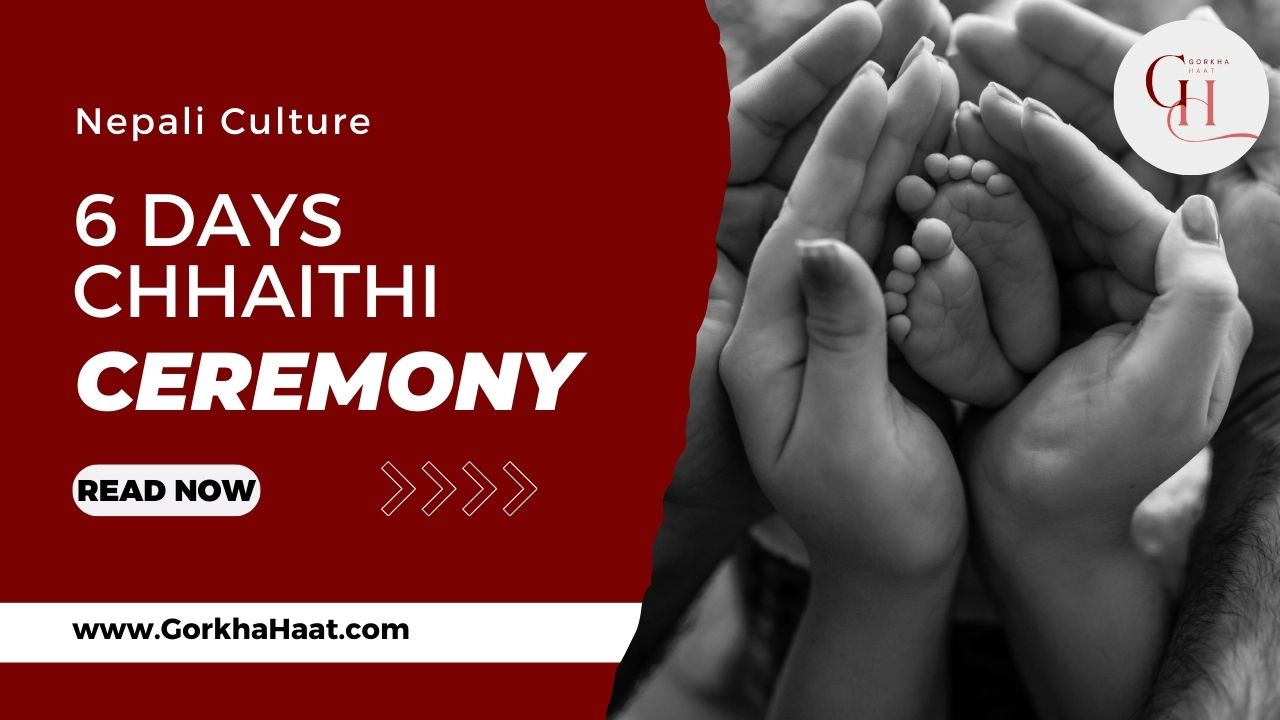
Chhaithi: The Sixth-Day Blessing Ceremony – Welcoming Destiny in Nepal and Darjeeling’s Gorkha Families
Namaste from the serene hills of Darjeeling! As your Gorkha Haat writer, surrounded by the whispering pine forests and the distant call of temple bells, I love sharing these intimate threads of our heritage. Today, let’s talk about Chhaithi – the quiet, mystical sixth-day ritual after a newborn’s arrival. Known as Chhathi or Shashthi Puja in broader Hindu contexts, in our Nepali-speaking communities it’s a tender women-led ceremony invoking the goddess of destiny to bless the child’s future.
While in Nepal this ritual often unfolds with deep Vedic solemnity in homes across the valleys, here in Darjeeling, Kalimpong, and Kurseong, our Gorkha families celebrate it with a gentle hill warmth – shorter, more intimate, and infused with local practicality. It’s one of the earliest milestones in a baby’s life, coming even before Nwaran (naming) and Pasni (rice-feeding). Join me as we explore its meaning, rituals, and the subtle ways it dances differently between Nepal’s heartland and our misty mountains.
What is Chhaithi? The Night Destiny is Written
Chhaithi, meaning “sixth” in Nepali, is performed exactly on the sixth day after birth (counting the birth day as day one). Rooted in ancient Hindu belief, it honors Chhathi Maiya or Vidhata – the goddess who, according to folklore, visits the home at midnight on this day to inscribe the newborn’s fate on their forehead or in a sacred book.
The core idea is profound: by lighting lamps and preparing a space of purity, the family invites divine grace to write a destiny filled with health, happiness, and prosperity. It’s a ritual of hope and surrender, acknowledging that while parents nurture, ultimate blessings come from above.
In Nepal, especially among Parbatiya (hill) Hindu families like Bahun-Chhetri and some Newar groups, Chhaithi is seen as essential protection during the vulnerable early days. In Darjeeling’s Indian Gorkha community, it carries the same spiritual weight but often feels more personal – a quiet family gathering rather than a large event, reflecting our history of adapting traditions amid tea estate life and migration.
Timing: The Sacred Sixth Day
Unlike Nwaran (11th day) or Pasni (5-6 months), Chhaithi is fixed on the sixth day, usually late evening or night to align with the goddess’s mythical visit around midnight.
In traditional Nepali homes, it’s strictly observed regardless of the baby’s gender. In Darjeeling, while we hold the same date, modern hospital births and busy schedules might shift it slightly to evening hours, ensuring working family members can join. No auspicious muhurta calculation is needed – the day itself is sacred.
This early timing marks Chhaithi as the first post-birth ritual, purifying the space before the mother and child fully rejoin daily life.
Significance: Protection, Purity, and a Bright Future
Chhaithi holds deep emotional and spiritual value:
Inviting Good Fortune: The belief that Vidhata writes the child’s lekha (destiny) encourages families to create an atmosphere of light and purity.
Women’s Ritual: Primarily led by maternal aunts (fufu) or senior women, it empowers female family members in blessing the newborn.
Purification After Birth: It symbolically ends the initial impurity period, welcoming divine protection against illness or misfortune.
Family Bonding: Though small, it brings close relatives together in joy and prayer.
In Nepal, it reinforces faith in karma and divine planning. In Darjeeling’s Gorkha households, it’s also a quiet affirmation of resilience – praying for the child to thrive in our challenging hill environment.
Preparations: Simple Yet Sacred
Preparations are modest, focusing on cleanliness and light:
The room is thoroughly cleaned, often with cow dung paste in rural Nepal or simple sweeping in urban/Darjeeling homes.
Oil lamps (diyo) or candles are readied.
A wooden plank (pirka) or clean space near the baby’s bed.
A red ink pen, notebook/paper, and sometimes rice or flowers.
Traditional sweets or fruits for offerings.
In Nepal, the mother’s sister (fufu) plays a key role, bringing gifts. In Darjeeling, with smaller nuclear families, any senior woman – grandmother, aunt, or even neighbor – steps in, adding a community touch.
The Rituals Step by Step – Nepal vs Darjeeling
Chhaithi is intimate and women-centric, lasting 30 minutes to an hour.
1. Purification and Lighting
The house is purified with incense. Multiple diyo are lit to illuminate every corner – ensuring the goddess can “see” clearly to write a beautiful destiny.
In Nepal: Lamps are placed throughout the home.
In Darjeeling: We use fewer lamps but add fairy lights or candles for a cozy hill vibe.
2. Preparing the Sacred Space
A notebook, red pen, and diyo are placed on a plank near the baby (or under the pillow/bassinet). Sometimes, the baby’s name (temporary) is whispered.
In Nepal: Often on the floor with traditional brass diyo.
In Darjeeling: On a table or modern bassinet side, with the pen and paper left overnight.
3. Maternal Aunt’s Role (Fufu ko Bhumika)
The fufu bathes, adorns herself, and performs key acts – circling the baby with light, offering blessings, and sometimes tying protective threads.
In Nepal: Fufu leads chants and gifts the mother gold or clothes.
In Darjeeling: Similar, but gifts are practical – baby clothes, cash – reflecting our pragmatic spirit.
4. Prayers and Offerings
Women sing soft bhajans or pray silently to Chhathi Maiya for wisdom in writing the child’s fate. Fruits, sweets, or milk are offered.
No priest is usually involved – it’s a family affair.
5. Leaving the Tools Overnight
The pen and paper remain beside the baby till morning, then stored as a keepsake.
In Nepal: Strict – nothing disturbs the space.
In Darjeeling: Same belief, but photos are clicked for memories!
6. Small Feast and Blessings
A light meal follows – sel roti, fruits, curd. Elders bless the child.
In Nepal: More elaborate sweets.
In Darjeeling: Includes momos or local snacks, turning it joyful.
Cultural Importance: A Gentle Beginning
Chhaithi beautifully sets the tone for a child’s life – humble, hopeful, and protected by feminine divine energy. In Nepali society, it’s the first of many samskaras, teaching respect for destiny while nurturing faith.
For Darjeeling Gorkhas, it’s a link to Nepal while embracing simplicity – no grand expenses, just pure intention.
Modern Adaptations: Keeping the Light Alive
Today:
In cities/Nepal urban: Candles replace oil lamps; virtual participation for abroad relatives.
In Darjeeling: Hospital delays might shift to seventh day; professional photos common.
Diaspora: Performed abroad with improvised items, livestreamed.
Yet, the midnight vigil and prayer for destiny remain timeless.
Key Differences: Nepal vs Darjeeling Gorkha Practice
Aspect | Nepal (Traditional) | Darjeeling Gorkha Community |
|---|---|---|
Scale | Family + close relatives | Very intimate, nuclear family focus |
Leadership | Maternal aunt (fufu) central | Any senior woman if fufu absent |
Lighting | Multiple traditional diyo | Mix of diyo and modern candles |
Duration/Timing | Late night, strict midnight alignment | Evening to night, flexible |
Food/Gifts | Traditional sweets, gold for mother | Practical gifts, hill snacks |
Involvement | Women-only core ritual | Slightly more inclusive |
Social Meaning | Strong emphasis on destiny writing | Added focus on health in hill life |
As the diyo flickers against Kanchenjunga’s silhouette, Chhaithi reminds us that every child’s story begins with light and love. May every newborn in our hills and valleys have their destiny written in golden ink.
Have you celebrated Chhaithi recently? Share your stories below!
Gorkha Haat Team
We share stories of authentic Nepali heritage, food, culture, and local markets.
Related Posts

Momo in Darjeeling: History, Recipes & Cultural Spread Across Hills, Nepal & India | Gorkha Haat
Explore Momo's origins from Tibet to Darjeeling, Kurseong, Kalimpong & Sikkim—now famous across India. Discover traditional recipes, variations, and cultural significance at Gorkha Haat.
Teej Festival in Darjeeling 2025: Hartalika Teej Rituals, Songs & Celebrations | Gorkha Haat
Experience the vibrant women’s festival of Teej in Darjeeling—red saris, fasting, traditional dances, and delicious hill foods. Discover rituals, cultural significance, and the best places to celebrate Hartalika Teej with Gorkha Haat.
Janku Ceremony Nepal & Darjeeling: Newar Longevity Guide 2026
Discover Janku – Newar elders’ divine longevity ritual at 77, 88, 99 years. Rituals, significance & differences between Kathmandu Valley and Darjeeling Newar traditions.
Comments
User Name
This is an example comment. Users can leave feedback here.